American Flyers

  • Now Hiring

Category: Training

News

Beyond the Familiar Skies Embrace New Challenges to Grow Your Pilot Skills
Flying is a pursuit that rewards precision, discipline, and consistency. But it also thrives on variety. As pilots, we spend countless hours refining procedures and mastering fundamentals, often in the same aircraft, over the same routes, and in predictable conditions. While repetition is valuable, staying within your comfort zone
Differences between a Private Pilot and Commercial Pilot Certification
For anyone passionate about flying, earning a pilot’s license is a major accomplishment. But as you progress through your aviation journey, you’ll quickly discover that not all pilot certifications are created equal. Two of the most common — and often misunderstood — are the Private Pilot Certificate and the
Is your aircraft clean, stocked and organized before takeoff
In aviation, every detail matters. Safety isn’t just about checklists and clear skies — it starts long before you taxi to the runway. One of the most overlooked yet essential habits every pilot should develop is keeping their aircraft clean, organized, and properly stocked before each flight. It may
Choosing a Flight School - What to Ask What to Consider
Deciding to become a pilot is an exciting milestone, but choosing the right flight school is one of the most important decisions in your aviation journey. The path from the classroom to the cockpit will shape your skills, mindset, and future opportunities. With so many training options available, knowing
Gain-real-Flight-Experience
Logging flight hours is an essential part of pilot training and certification, but it’s important to understand that accumulating hours isn’t the same as gaining meaningful flight experience. The real difference between a pilot who simply logs time and one who develops true skill lies in how those hours
Take the First Step and Finish What You Started
We get it. You are a successful professional and don’t have the time to finish getting your pilot certificate. If you are like the several thousand other students we have, you probably work late during the week and spend your weekends either working or with your family. You couldn’t
Technology has changed the face of general aviation. Everything pilots had to do for themselves in the past, technology now does for you. It accurately tells you where you are, the airspace you are in, the nearest airports and how to get there, all the instrument approaches that apply
career in aviation
By Steven Daun, National Chief Pilot I guess you can say I am a little biased, but who wouldn’t want to work in aviation? Yet most people seem to think that if they aren’t cut out for being a pilot, and they don’t want to be a flight attendant
cold weather operations
With the hot weather disappearing in most parts of the country, pilots are thinking about the upcoming winter weather and the challenges that will affect how we plan and execute our flights. While cold weather and icing conditions quickly pop into the minds of most pilots when thinking about
Instrument Training
You don’t need to have accumulated hours of experience before embarking on your instrument training; in fact, you can start the day after your private pilot checkride. Almost 80% of our private pilot graduates come back to American Flyers for their Instrument Rating; they recognize the safety and the
By: Steven Daun, National Chief Pilot Records show that methods to tell the future, like a crystal ball, have been used as far back as the 1st century. Soothsayers used the magic ball to give advice to the world’s most powerful people. If you think about this, you must
Instrument Rating
By Steven Daun, National Chief Pilot As the old saying goes: “just because you can doesn’t always mean that you should.” This can be said of many things in aviation. Many schools advertise a 10-day instrument rating and many pilots end up frustrated when they find that they can’t
BY STEVEN DAUN, NATIONAL CHIEF PILOT The average age of someone starting flight training is 31. For private pilots, it’s 48. That means the average person in the initial flight training process is probably quite removed from taking standardized written assessments, but is very accustomed to practical and real-world
Why Standardization is Important
BY STEVEN DAUN, NATIONAL CHIEF PILOT You are flying IFR on the last hour of what has been a five-hour IFR flight. The weather is poor, it’s cold and bumpy, and you have a couple of passengers who are getting nervous. Suddenly, one of your annunciator lights comes on
By Steven Daun, National Chief Pilot From the day we started to learn about the FAR’s during our Private Pilot training, we have understood §61.56, which deals with the flight review. If you ask pilots and instructors what the purpose of a flight review is, you will receive many
By Steven Daun, National Chief Pilot Unlike the Flight Review, the Instrument Proficiency Check (IPC) is only required if a pilot’s instrument currency lapses—there is no regularly recurring requirement for an IPC. As long as instrument-rated pilots accomplish the approach currency requirements of 14 CFR 61.57, they may never
This issue of the Pilot’s Digest is all about becoming a better pilot. A good pilot is one that is always learning, but a great pilot is one that practices what they have learned. If you’re like me, you’ve watched the ESPN special about Michael Jordan and the Chicago
By Steven Daun, National Chief Pilot For the majority of my career in aviation, I’ve noticed that very few companies and instructors like to discuss safety trends. This could be for a few reasons — one being that part of this discussion includes tough subjects like accidents and incidents.
Every month at 3 of our locations— Morristown, New Jersey; Addison, Texas; and Pompano Beach, Florida—groups of students gather together to help each other become Certified Flight Instructors (CFI’s).  We call this our very own CFI Academy. We offer a 15-day CFI-A Academy (only in Morristown) and 30-day combined
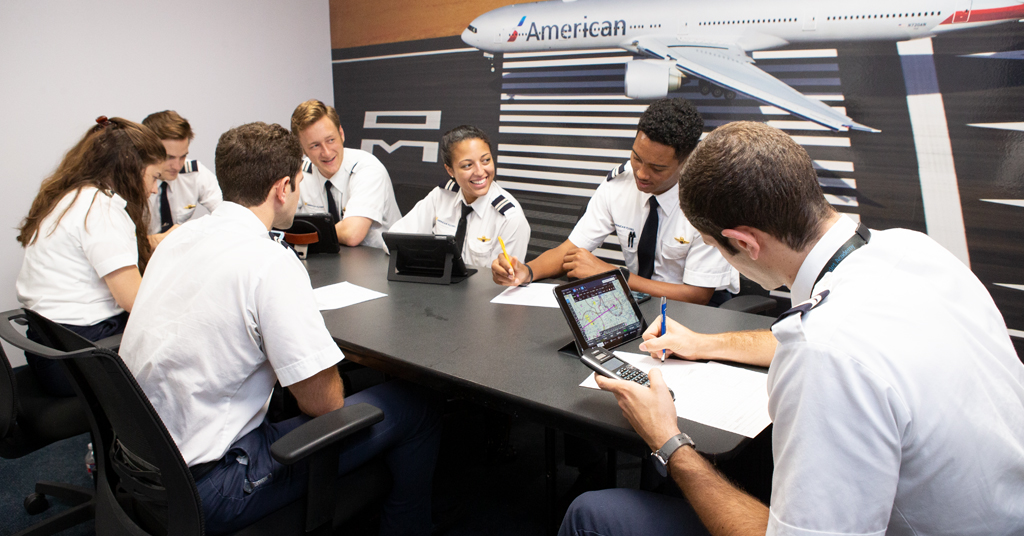
American Flyers’ academies are based upon group-centered learning. Each course is made up of a group of students that all have one major thing in common: their love for flying. Students are often taught together in the classroom, providing them with the opportunity of studying together and helping each
Over our 80-year history, we have become known as the ‘Finish-Up Experts’. That’s not a surprise to us, as we have always, and will always continue to cater to the individual looking to complete their private, commercial or instructor license and/or instrument rating. What is a surprise is that