Flying is a pursuit that rewards precision, discipline, and consistency. But it also thrives on variety. As pilots, we spend countless hours refining procedures and mastering fundamentals, often in the same aircraft, over the same routes, and in predictable conditions. While repetition is valuable, staying within your comfort zone
For anyone passionate about flying, earning a pilot’s license is a major accomplishment. But as you progress through your aviation journey, you’ll quickly discover that not all pilot certifications are created equal. Two of the most common — and often misunderstood — are the Private Pilot Certificate and the
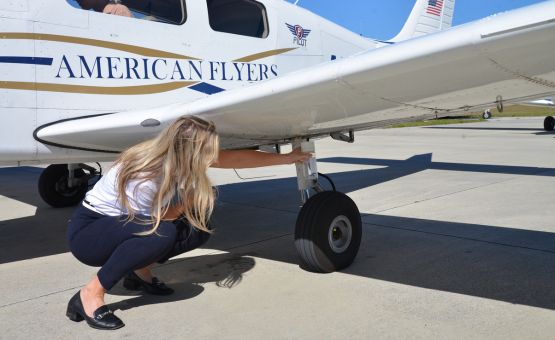
In aviation, every detail matters. Safety isn’t just about checklists and clear skies — it starts long before you taxi to the runway. One of the most overlooked yet essential habits every pilot should develop is keeping their aircraft clean, organized, and properly stocked before each flight. It may
Deciding to become a pilot is an exciting milestone, but choosing the right flight school is one of the most important decisions in your aviation journey. The path from the classroom to the cockpit will shape your skills, mindset, and future opportunities. With so many training options available, knowing
Logging flight hours is an essential part of pilot training and certification, but it’s important to understand that accumulating hours isn’t the same as gaining meaningful flight experience. The real difference between a pilot who simply logs time and one who develops true skill lies in how those hours
We get it. You are a successful professional and don’t have the time to finish getting your pilot certificate. If you are like the several thousand other students we have, you probably work late during the week and spend your weekends either working or with your family. You couldn’t
Technology has changed the face of general aviation. Everything pilots had to do for themselves in the past, technology now does for you. It accurately tells you where you are, the airspace you are in, the nearest airports and how to get there, all the instrument approaches that apply
By Steven Daun, National Chief Pilot I guess you can say I am a little biased, but who wouldn’t want to work in aviation? Yet most people seem to think that if they aren’t cut out for being a pilot, and they don’t want to be a flight attendant
With the hot weather disappearing in most parts of the country, pilots are thinking about the upcoming winter weather and the challenges that will affect how we plan and execute our flights. While cold weather and icing conditions quickly pop into the minds of most pilots when thinking about
You don’t need to have accumulated hours of experience before embarking on your instrument training; in fact, you can start the day after your private pilot checkride. Almost 80% of our private pilot graduates come back to American Flyers for their Instrument Rating; they recognize the safety and the
AS I REFLECT ON 2024, I AM AMAZED BY HOW QUICKLY TIME HAS PASSED. The days seem to fly by, making me wonder where the time has gone. It’s often said that as we grow older, time seems to speed up, and I find this especially true. While I
Dreaming of being able to fly is as old as man himself. Who hasn’t watched birds soar gracefully across the sky, wondering what it would be like to do what they do and see what they see? Some have even strapped large balloons to lawn chairs to feel that
In October 2011, an instructor and student were preparing for a flight from a non-towered airport in the southwest. The lesson began as usual, with the instructor guiding the student through the preflight procedures on their aircraft—a Cessna 182. When they reached the nose of the aircraft, the instructor
I’D ARGUE THAT AN INSTRUMENT RATING AND STAYING CURRENT IN ITS USE ARE THE MOST IMPORTANT PIECES OF SAFETY EQUIPMENT A PILOT CAN HAVE IN THEIR POSSESSION. Inadvertent flights into IMC are one of the highest causes of accidents in general aviation, and, surprisingly, about one-third of those accidents
As a pilot, the evolution of aviation technology has undoubtedly changed the landscape of flying in the past 20 years. The advancements in avionics, the introduction of apps like Foreflight, and the development of Garmin’s innovative technology have all revolutionized how pilots navigate, communicate, and operate aircraft. These technologies
Building flight time versus gaining experience as a low-time commercial pilot is a critical topic in the aviation industry today. With the requirement of 1,500 flight hours to apply for an Airline Transport Pilot license, the focus has shifted to how quickly these hours can be accumulated versus the
The Oshkosh Airshow, held annually in Oshkosh, Wisconsin, is a mecca for aviation enthusiasts and professional aviators from all over the world. The event is a week-long celebration of all things aviation. With over 1,700 aircraft arrivals and more than 10,000 aircraft operating at Wittman Regional Airport and other
As the old saying goes, “FAR Part 61 tells you how to get your license, and FAR Part 91 tells you how to lose it.” What is always amazing to me is how some pilots can invest so much in their training and certificates, yet fail to keep them
The mark of a good pilot is staying ahead of the airplane, anticipating what’s coming, and being ready to act promptly. This principle applies to both flying the airplane and managing radio communications. To “stay ahead” of communications, the best place to start is on the ground. Before takeoff,
There are three things in aviation that do a pilot no good: altitude above you, runway behind you, and fuel you don’t have. How then do we ensure that we do have enough fuel and use it safely, effectively, and efficiently? For a safe flight, you must have sufficient
Whether you are learning to fly for fun or as a career, the journey of becoming a pilot is marked by many milestones. Among these, purchasing your first airplane can be one of the most significant. The price of new single-engine airplanes has surged to well over $400,000 in
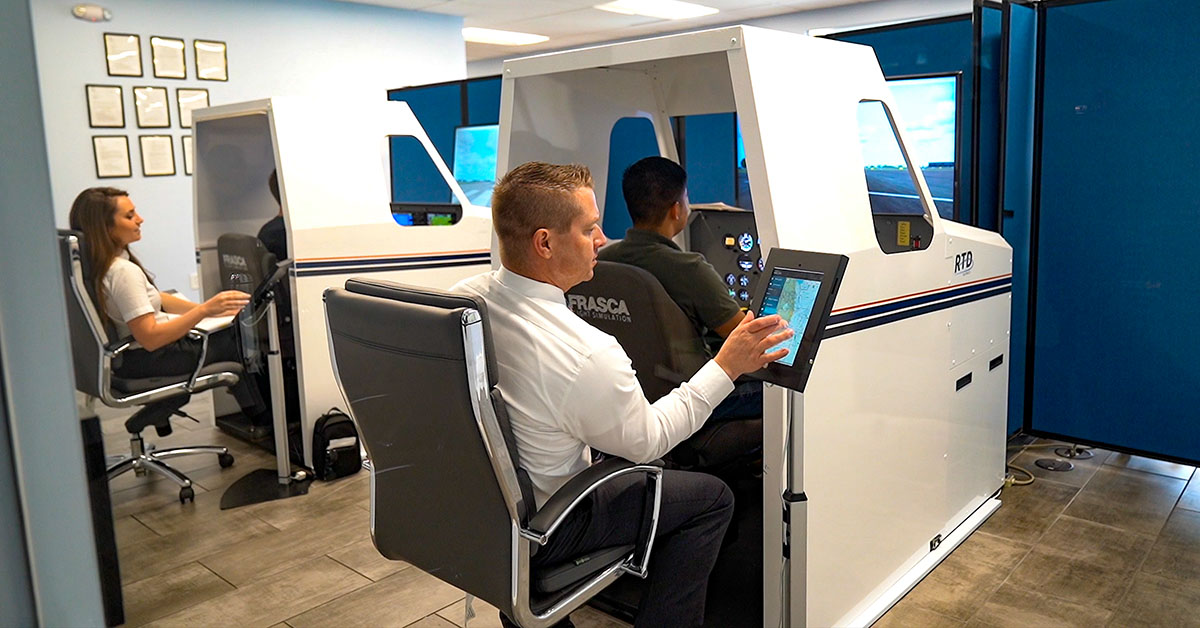
Records show that methods to tell the future, like a crystal ball, have been used as far back as the 1st century. The 20th century is certainly much farther along in history regarding science, technology, education, and knowledge than the 1st century. Edwin Link made the first “flight simulator”