









Airspace functions like invisible boundaries in the sky. It is a complex, three-dimensional grid designed to manage the safe and efficient flow of air traffic. Mastery of airspace regulations for pilots serves as a pillar of being a professional pilot. This knowledge distinguishes a disciplined aviator from a recreational operator. The legal and safety ramifications of pilot deviations remain severe. The FAA maintains the stance that ignorance of the regulations provides no excuse for violations.
Situational awareness relies on your understanding of the air space you occupy. This clarity allows for the anticipation of traffic patterns and expectations from Air Traffic Control. Modern tools, such as Electronic Flight Bags(EFBs), offer immense support, yet you must verify digital data against a strong mental model of the airspace. For a deeper dive into the services provided, take a look at our guide on Air traffic control services.
Controlled vs. Uncontrolled Airspace
The National Airspace System divides airspace into two primary categories. Controlled airspace exists where Air Traffic Control provides services to IFR and some VFR flights. The system manages the systematic separation of aircraft, particularly around busy terminals and high-altitude routes. Uncontrolled airspace, or Class G, defines regions where ATC lacks the authority or responsibility to control air traffic. Pilots bear the responsibility for their own separation using see and avoid principles. These designations stem from 14 CFR Part 71 and maintain the safety of the entire system. For specific terminology, review our Airspace-class definitions and Controlled and non-towered airport operations.
The Alphabet Soup: Controlled Airspace
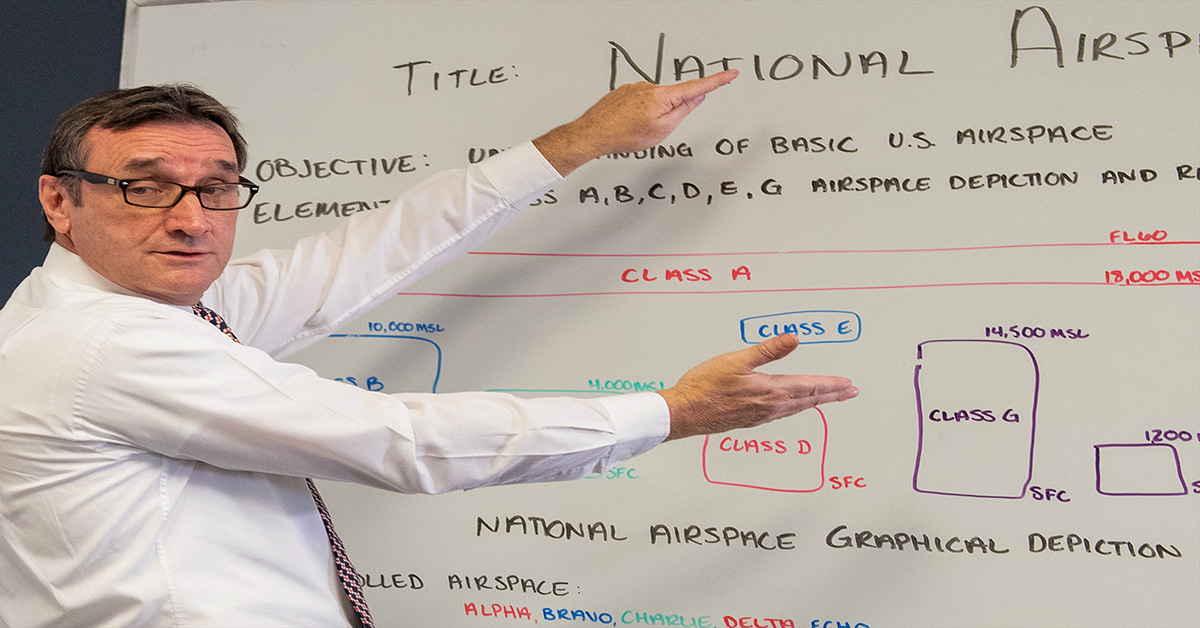
The classification system assigns specific requirements to different altitudes and regions. Understanding these divisions is necessary for compliant and safe navigation.
- Class A: High-Altitude Operations Class A airspace spans from 18,000 feet MSL up to Flight Level 600. The transition from MSL to pressure altitude occurs at 18,000 feet. Operations require Instrument Flight Rules (IFR), an IFR clearance, and a transponder equipped with Mode C or S. This environment demands the discipline required for high-altitude navigation and high-performance aircraft operations.
- Class B: Complex Hubs Class B airspace protects large turbine aircraft during arrival and departure. It features an upside-down wedding cake structure of tiered airspace. A pilot must hear the specific words, “Cleared to enter Class B Airspace,” to gain entry; two-way radio communication alone is insufficient. Equipment mandates include a transponder with altitude reporting and ADS-B Out within the Mode C Veil. Learn more about Class B, C and D airspace training and tips for Planning for a busy controlled airport.
- Class C: Towered Hubs Class C airspace utilizes a two-tiered structure. This usually includes a 5 NM inner circle from the surface to 4,000 feet AGL and a 10 NM outer shelf from 1,200 to 4,000 feet AGL. Entry requires established two-way radio communication, where ATC responds with your specific tail number.
- Class D: Standard Towered Airspace Class D airspace generally covers a 4 NM radius from the surface to 2,500 feet AGL around airports with an operating control tower. This airspace manages traffic flow in the immediate vicinity of the airport environment.
- Class E: The En Route Environment Class E airspace occupies the regions not otherwise classified, filling the gaps between other controlled airspaces. Floors vary based on location, beginning at the surface, 700 feet AGL, or 1,200 feet AGL, and extending up to Class A.
Uncontrolled Airspace: Class G
Class G airspace exists from the surface until it meets the floor of Class E airspace. Pilots maintain complete independence here. Increased responsibility for vigilance defines this airspace, and lower weather minimums allow for operation in marginal conditions. The lack of ATC separation services makes scanning for traffic and maintaining proper cloud clearance the most important task for a pilot.
Airspace Reference Guide
| Airspace Class | Visibility | Distance from Clouds | Equipment Required | Communication |
|---|---|---|---|---|
| Class A | N/A (IFR Only) | N/A (IFR Only) | Mode C/S, ADS-B, IFR | ATC Clearance |
| Class B | 3 SM | Clear of Clouds | Mode C/S, ADS-B Out | Specific Clearance |
| Class C | 3 SM | 500′ below, 1000′ above | Mode C/S, ADS-B Out | Two-way Comm |
| Class D | 3 SM | 500′ below, 1000′ above | Two-way Radio | Two-way Comm |
| Class G | 1 SM (Day) | Clear of Clouds | None | None |
Operational Procedures and Special Use
Professionalism requires strict adherence to communication protocols. Follow these basic steps to ensure clear and efficient interactions in the National Airspace System:
- Identify yourself clearly on the first call to ATC.
- State your current position and altitude accurately.
- Express your intentions or requests concisely.
- Verify all instructions and clearances through readback.
- Monitor frequencies continuously for traffic advisories.
Ensure you remain proficient with ATC radio communication procedures.
Special use airspace warrants careful study. Prohibited areas exist for security reasons, and entry is forbidden. Restricted areas contain hazards like artillery firing, requiring joint-use authorization. Warning areas resemble Restricted Areas but sit over international waters. Alert areas warn of high volumes of pilot training or unusual activity.
Mastering Airspace Proficiency
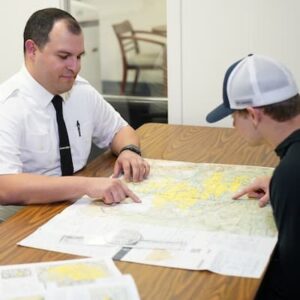
Effective flight planning integrates the use of Sectional Charts and Electronic Flight Bags to identify boundaries before takeoff. Reviewing NOTAMs for Temporary Flight Restrictions stands as a critical safety step. Attention to detail in airspace regulations reflects an overall commitment to safety and excellence. Technology acts as an enhancement, but your fundamental understanding of the sky provides the ultimate backup. Always keep updated with Flight-planning and weather resources and have a plan for when your technology fails.