







Sunset can move by two hours or more between June and December, and your flight planning has to move with it. That shift changes when your position lights go on, what you can log as night, and when your landings count toward carrying passengers at night.
Civil, Nautical, and Astronomical Twilight
Planning an evening flight takes more than checking the sunset time. There are three phases of twilight, and only one of them sets the legal start of night.
- Civil Twilight: The sun is 0 to 6 degrees below the horizon. You can still see the ground, and the horizon is clear. Under 14 CFR 1.1, night begins when evening civil twilight ends and lasts until morning civil twilight begins.
- Nautical Twilight: The sun is 6 to 12 degrees below the horizon. The horizon gets hard to pick out, especially over water or unlit terrain. It’s already night for logging.
- Astronomical Twilight: The sun is 12 to 18 degrees below the horizon. It matters to astronomers, not to your logbook.
For logging, civil twilight is the only one that counts. Carrying passengers at night uses a different clock, covered below.
Flight Planning With Zulu Time and an EFB
Plan in Zulu (UTC) time. Local time invites mistakes when you cross time zones or land close to sunset, and Zulu gives you one clock wherever you are. Then convert sunset and the end of civil twilight to local time at your destination.
An Electronic Flight Bag (EFB) gives you sunset times in seconds, but as Mike Bliss puts it, don’t blindly accept everything it generates. Make sure it’s using your destination airport and date, and check whether the time shown is sunset or the end of civil twilight. Then ask if a weather or ATC reroute would push your arrival past dark. Our post on What Happens When Technology Fails? covers backup planning.
Keep a manual Plan B, too. If weather forces a diversion into darkness, you should be able to work out your arrival time without the tablet.
Training Around Earlier Sunsets
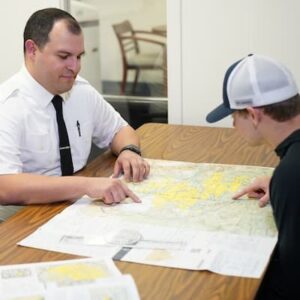
As winter approaches, flight schools often move training blocks earlier in the day so lessons finish before dark. That matters most for primary students, who build basic skills in daylight before they ever fly at night.
At Scottsdale Airport (KSDL), late-June sunset is about 7:40 p.m., civil twilight ends about 8:10, and the passenger-carrying window (sunset plus one hour) opens about 8:40. By late December, those times are about 5:25, 5:50, and 6:25 p.m. A two-hour lesson starting at 4:00 p.m. is a day lesson in June and ends after dark in December.
Instructors can use the early darkness to start night prep, such as setting up cockpit lighting and noticing how flying feels different once the sun goes down. For what night flying is really like, read The Excitement of Night Flying.
Cockpit Prep for Night Flights
A cluttered cockpit is an annoyance in daylight. At night, it can be a real hazard.
Set up your cockpit before taxi so everything is within reach without digging for it or turning up the cabin lights. Before a flight that may end after dark:
- Preserve Night Adaptation: Carry a flashlight with a red or dimmable lens. Bright white light ruins the night vision you need to spot traffic.
- Verify Backup Lighting: Every passenger and the pilot should have a working light source. Test the batteries before departure.
- Prepare Physical Charts: Paper charts aren’t required for most Part 91 flights, but if your EFB dies, they can still get you to a diversion airport.
- Confirm Airport Lighting: Check if your destination has pilot-controlled or continuous lighting, and confirm the airport is open when you’ll arrive.
For more on choosing where to land, see our tips on Picking the Right Destination Airport.
Logging Night Time and Night Landings
Under 14 CFR 61.51, each logbook entry must note day or night. The catch is that the regulations use three different clocks for night:
- Logging night time: From the end of evening civil twilight to the beginning of morning civil twilight (14 CFR 1.1).
- Carrying passengers at night: From 1 hour after sunset to 1 hour before sunrise, you can carry passengers only if you’ve made three takeoffs and three full-stop landings in that window in the past 90 days, in the same category and class of aircraft (14 CFR 61.57(b)). Touch-and-goes don’t count.
- Position lights: On from sunset to sunrise (14 CFR 91.209).
So a landing 20 minutes after civil twilight ends goes in your logbook as night but doesn’t count toward the three landings you need to carry passengers.
If a flight crosses the end of civil twilight, log the first part as day and the rest as night. Mason Ross’s golden rules of logging include making your day and night columns add up to your total flight time. Use the Remarks section for night landings, maneuvers, and actual or simulated instrument time.
Write entries in ink. Skip the whiteout; draw a single line through a mistake and initial it. A messy logbook makes your night landings harder to prove.
Plan Around the Sun
Old-school planning keeps you ahead of the aircraft. Before every evening flight, write down sunset and the end of civil twilight at your destination. If you’re flying to get your three night landings, add an hour to sunset; landings before then don’t count.