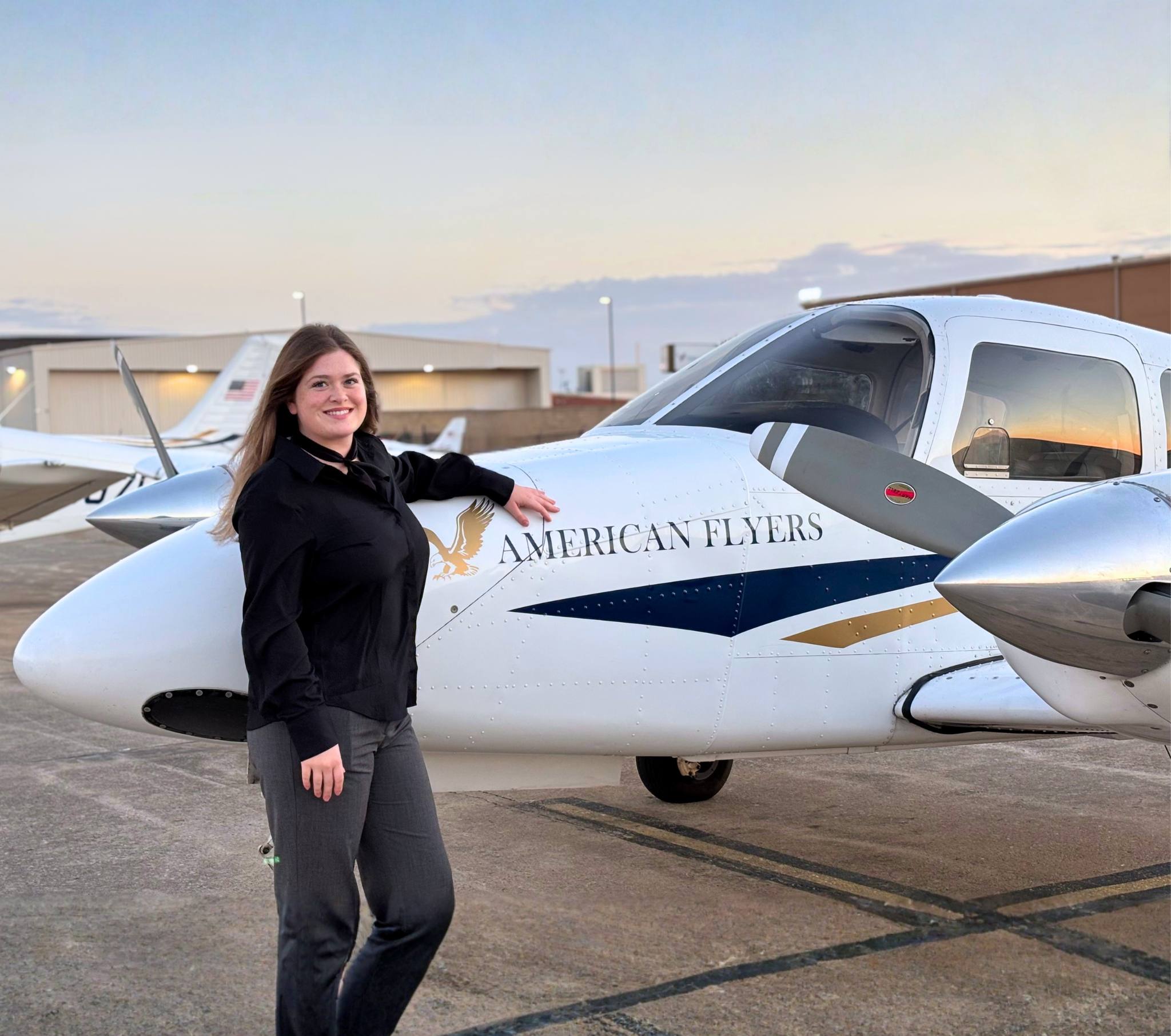
American Flyers is dedicated to ensuring our students build the confidence, skill sets and knowledge required to be fully-competent and safe pilots.
For those seeking to earn their commercial pilots license with the goal of becoming an airline pilot and can not commit to an 8-month full time course, there are 1-on-1 options available.
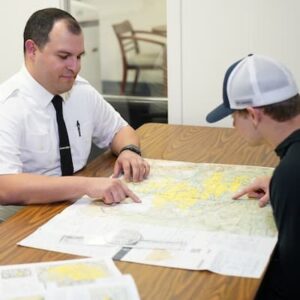
Instead of a rigid, one-size-fits-all schedule, our 1-on-1 Career Program provides the structure of a professional pilot academy with the personalized attention of a dedicated mentor. At American Flyers, you have dedicated instructor support. Our instructors are full-time employees, not independent contractors. They are available whenever your schedule permits, ensuring no delays in your training or aircraft availability. Our step-by-step program is designed to take you from your first flight to your Commercial Pilot License, ensuring each phase builds a rock-solid foundation for the next.
Step 1: The Private Pilot Certificate
- "Your License to Learn”
FAA Knowledge Test – Where your journey begins. Your professional pilot career starts with the Private Pilot Certificate. In this phase, you’ll master the fundamentals of aircraft control, safety, and navigation.
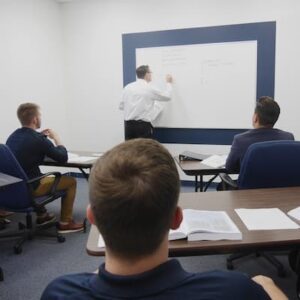
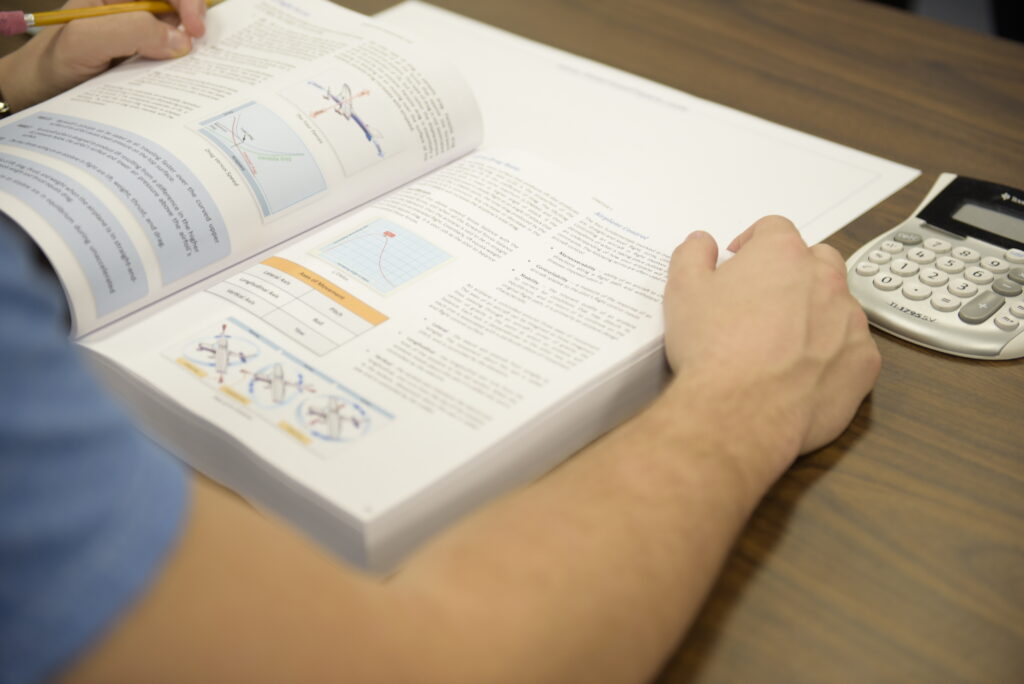
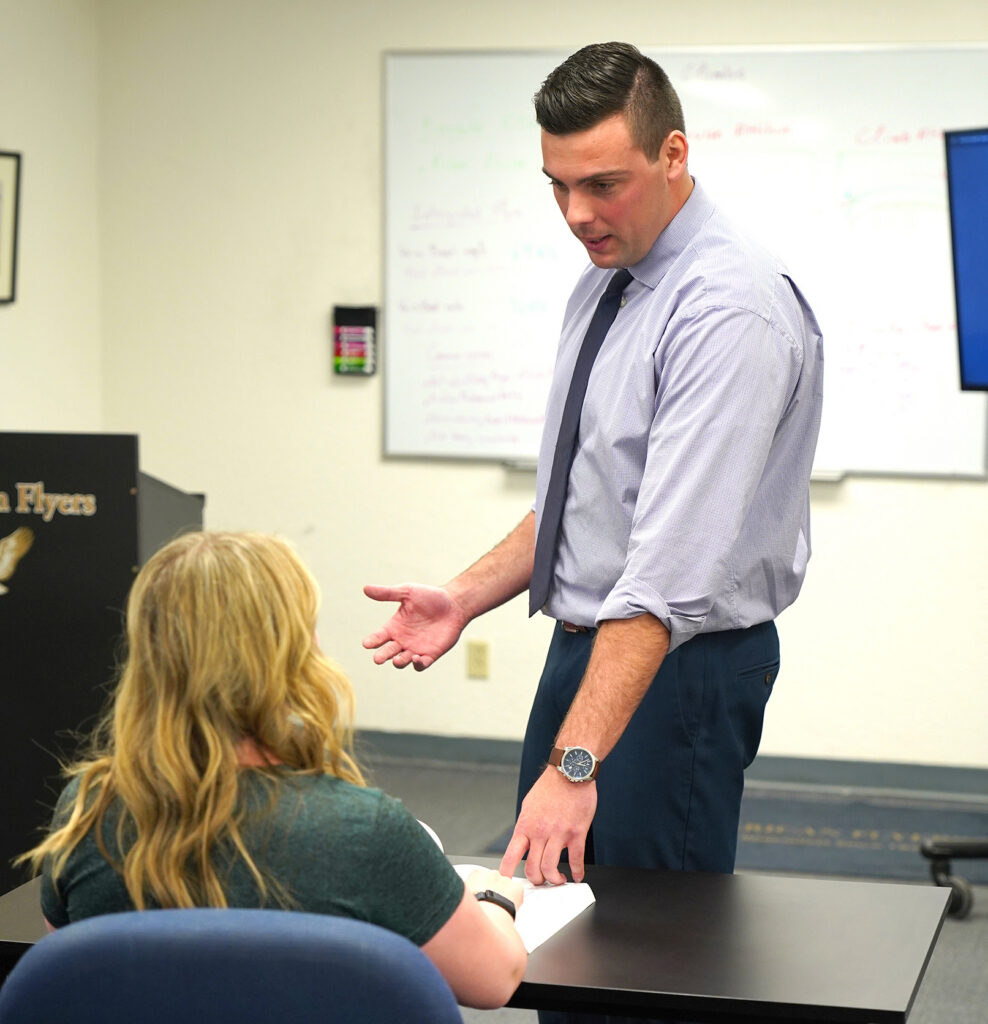
Private Written Prep Course is a 3-day intensive classroom experience that ensures you don’t just memorize answers, but truly understand the regulations, aircraft fundamentals, charts and navigation, airspace and weather. After which you will be ready to take the FAA Knowledge Test.
The Flight Training Milestones are governed by FAA regulations (14 CFR) and structured to ensure mastery of essential skills. These hours are dedicated to mastering aircraft control, emergency procedures, and complex cross-country navigation, culminating in the practical test with an FAA examiner who assesses technical proficiency and sound aeronautical decision-making.
Step 2: The Instrument Flight Rating (IFR)
The Instrument Rating is often considered the most challenging and rewarding phase of training. To fly for the airlines, you must be a master of the IFR environment. This training is where you will develop the precise, by-the-numbers flying skills necessary to operate safely, regardless of weather or night flying.
Instrument Written Prep Course is a critical milestone on your path to flying safer and earning a Commercial Pilot Certificate. By tackling complex instrument flight rules and meteorology in a concentrated 3-day course, you gain the foundational knowledge to excel in your instrument flight training.
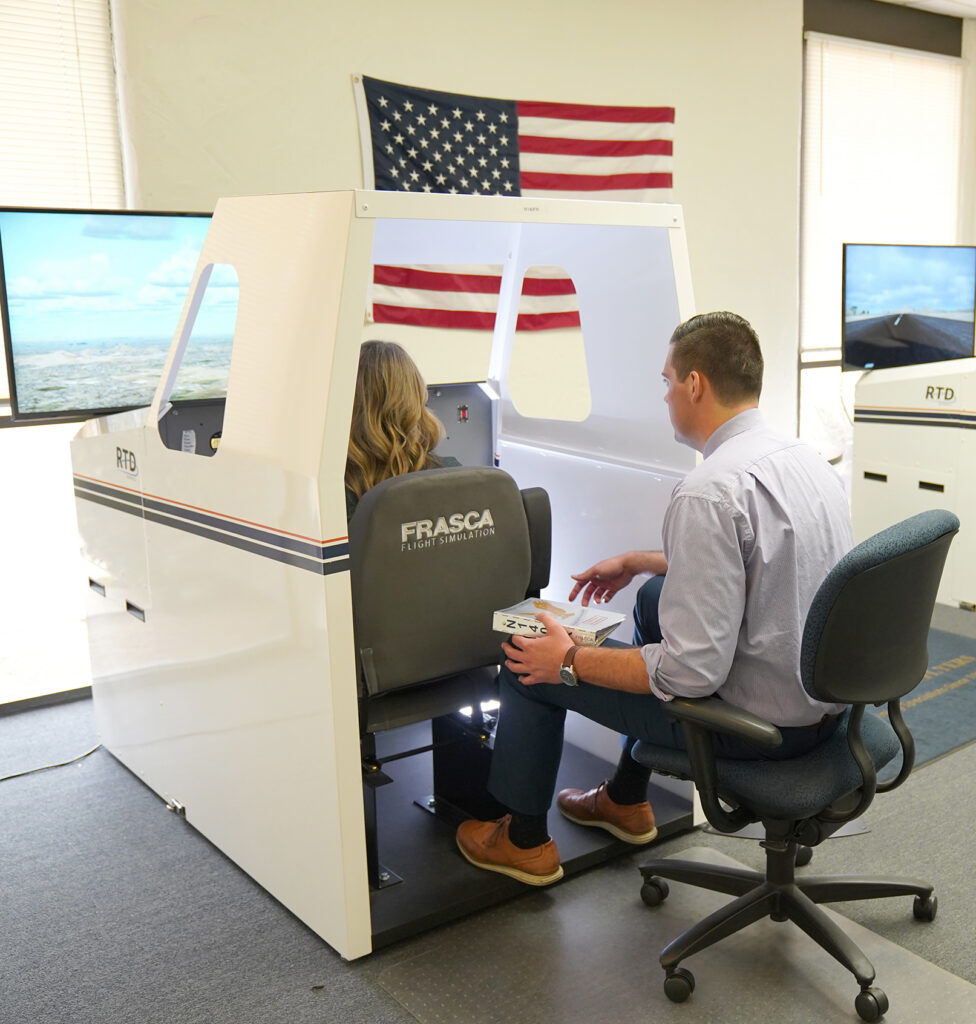
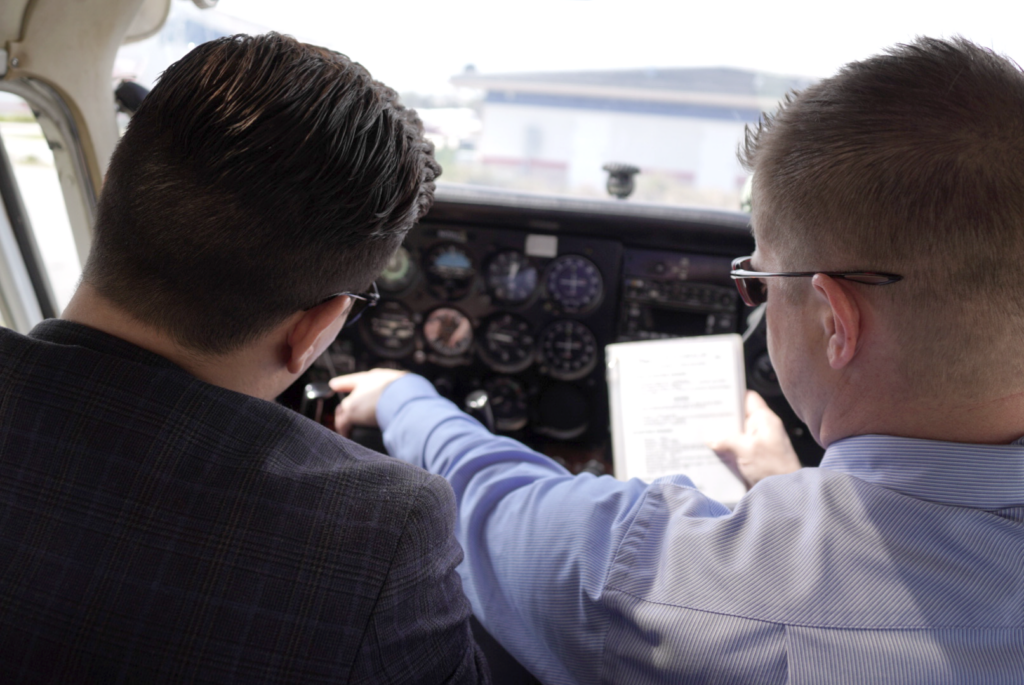
Instrument Flight Training utilizes a mix of advanced simulators and aircraft. Student pilots master controlling the plane solely by reference to instruments, executing complex radio navigation, and managing critical Air Traffic Control (ATC) communications. As an FAA-approved Part 141 flight school, American Flyers’ program allows students to efficiently bypass the prerequisite of 50 hours of cross-country pilot-in-command time, accelerating their progress toward the Commercial Pilot Certificate.
Step 3: The Commercial Pilot License (CPL)
Here, the focus shifts from basic proficiency to professional-grade precision.
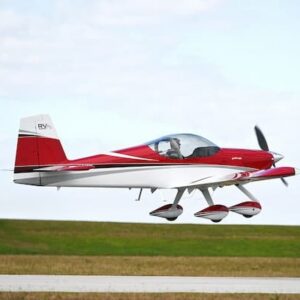
The Commercial Pilot License marks the crucial legal threshold authorizing a pilot to fly for compensation, shifting the training focus from basic proficiency to professional-grade flight skills. Under FAA regulations (14 CFR Part 61), earning the certificate requires a minimum of 250 total flight hours, including training in a complex or technically advanced aircraft. This phase of training is demanding, focusing on advanced maneuvers—such as chandelles and lazy eights—and mastering complex aircraft systems and emergency procedures to meet the higher standards of safety and airmanship required for professional operations.
At American Flyers we often integrate Instrument and Commercial training into a combined program. This allows you to build the required 155 hours to earth both your instrument rating and commercial certificate efficiently, while mastering the high-level skills airlines demand.
Step 4: Multi-Engine Rating
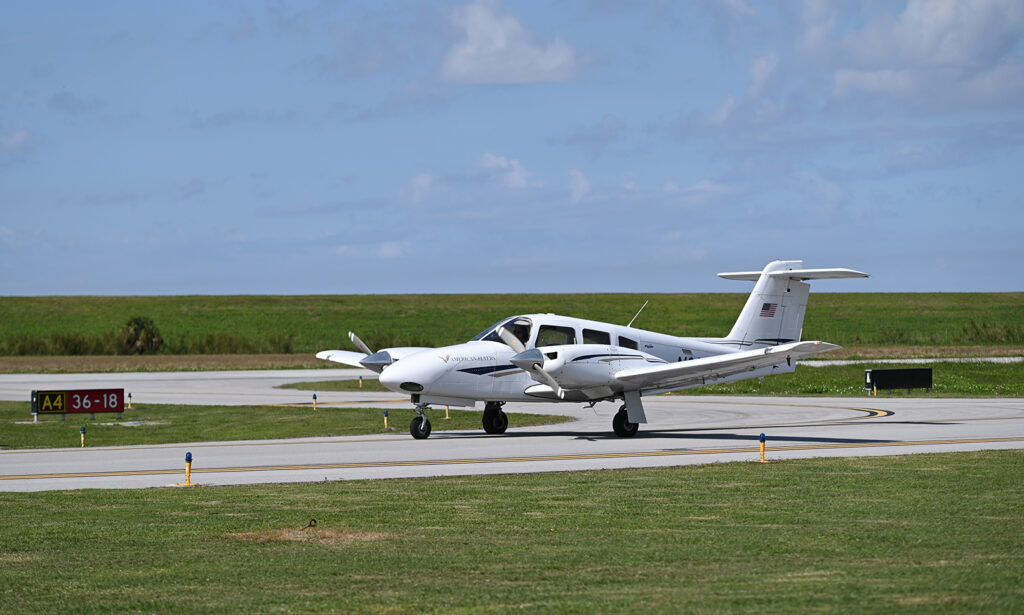
The Multi-Engine Rating is a critical add-on endorsement that transitions a commercial pilot to twin-engine aircraft in preparation for airline operations. Governed by FAA regulations as a “train to proficiency” rating, the Multi-Engine rating has no minimum flight hour requirements, unlike other certificates. The training is a rigorous education in multi-engine aerodynamics, focusing heavily on emergency procedures, such as mastering the “Critical Engine” concept and safe handling during engine-out scenarios. American Flyers recommends a program that includes approximately 12 hours of dual flight instruction and 10 hours of ground instruction, often utilizing advanced simulators to build the necessary procedural discipline and confidence efficiently.
Step 5: The 30-Day CFI-A & CFI-I Academy
The ultimate test of a pilot’s knowledge is the ability to teach it. Our 30-Day CFI Academy is a legendary program that is built on the principle that “those who know, do; those who understand, teach,” moving beyond basic memorization to a deep, professional mastery of aviation. Designed to earn you both your Certified Flight Instructor (CFI-A) and Certified Flight Instructor-Instrument (CFI-I) ratings in a single intensive month. After passing the 30-day academy, teaching as a flight instructor is the strongest foundation for what the airlines look for when hiring. Teaching also serves as the primary career bridge for accumulating your 1,500 flight hours.
The CFI-A (Airplane) portion of the course, the focus is on mastering the Fundamentals of Instructing (FOI) and reclaiming the “stick and rudder” maneuvers of the Private and Commercial certificates from the right seat. You learn to narrate every action, explaining the “why” behind the “how” while maintaining Commercial-level precision in maneuvers. American Flyers emphasizes safety culture and professionalism, teaching you how to manage and encourage students, identify issues, and issue logbook endorsements with confidence.
The CFI-I (Instrument) phase shifts you from being a proficient instrument pilot to a subject matter expert capable of teaching the complex “mental game” of flying without outside references. You will master the teaching of scanning patterns, instrument interpretation, and complex IFR procedures, including precision approaches, holdings, and advanced GPS navigation. American Flyers leverages their high-tech simulators and, whenever possible, actual IFR conditions to build real-world confidence, ensuring you can teach future students how to manage navigation and communicate effectively with ATC.
* If the 30-day CFI Academy is not right for you there are CFI 1-on-1 programs available that can be customized to meet your needs.
Ready to start your step-by-step journey to earn your commercial pilots license?
Contact us today to customize your 1-on-1 training schedule.