




By Mike Bliss
Obtaining a pilot certificate or rating normally involves passing three tests, a knowledge (written) test, a flight test, and an oral exam taken together with the flight test. In this article, we will explore the ins and outs of the oral exam.
The exam is usually administered by a Designated Pilot Examiner (DPE) or in some instances by an FAA Inspector. The DPE is required to follow the Airman Certification Standards (ACS) for the certificate or ratings being sought. The examiner must use a structured plan of action to ensure all required topic areas are covered and DPEs are not allowed to teach or coach the applicant during the exam. Neither are they allowed to give second chances.
The oral exam doesn’t begin and end in a classroom. It continues throughout the preflight inspection and other preparations for the flight portion of the practical test. The classroom portion usually lasts from one to three hours depending on certificate or rating desired. An oral exam for a Certified Flight Instructor will often last much longer because of the vast amount of material that needs to be covered.
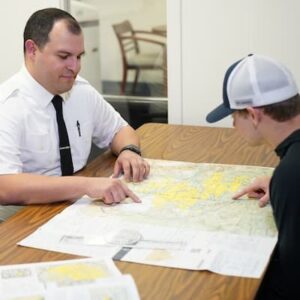
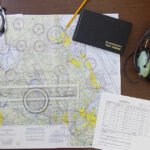
The oral exam will include some questions that require rote knowledge, such as required equipment or airspace dimensions, but many areas will be tested using scenario-based questions. These questions usually arise from the assigned cross-country flight. Using the applicant’s cross-country flight planning, the examiner will evaluate the candidate’s knowledge and understanding of airspace, aeronautical charts and symbols, interpretation of weather reports, aircraft performance, and weight and balance calculations. The scenario-based questions require the student to grasp the implications of each aspect of these facts as they apply to the specific situation at hand.
Preparing for the oral exam is a joint effort of the student and the instructor. The instructor will teach the material starting from day one and then review it prior to the oral. The student should not expect to be spoon fed everything that is needed but must take the initiative to master the material and prove that he can apply it in specific flight situations.
The complete scope of what can be tested is found in the appropriate ACS. The ACS is divided into several Areas of Operation, which together cover all that the applicant needs to know. Each Area of Operation is further divided into three subdivisions, Knowledge, Risk Management, and Skills. While the student can expect their instructor to cover these areas, it is necessary for the student to study all the material on their own to make sure nothing has been neglected. There should be no real surprises on the oral because it is all laid out in the ACS.
The scenario-based portion of the oral is one of the things that puts the practical in “Practical Test.” It is recognized by both flight instructors and the FAA that a person can have knowledge without understanding. What that means is that a person might be able to recite the appropriate facts about a certain subject area but not be able to apply those facts in a real-life situation. Scenario-based questions don’t deal with one item at a time but pull together all relevant issues affecting the question asked. For example, the examiner might ask, “How do you decide at what altitude to fly the planned cross-country flight?” To answer the question the applicant would have to consider airspace, weather, regulations, performance, etc. In a sense, scenario-based questions determine if the applicant is ready to exercise the privileges of the desired certificate or rating.
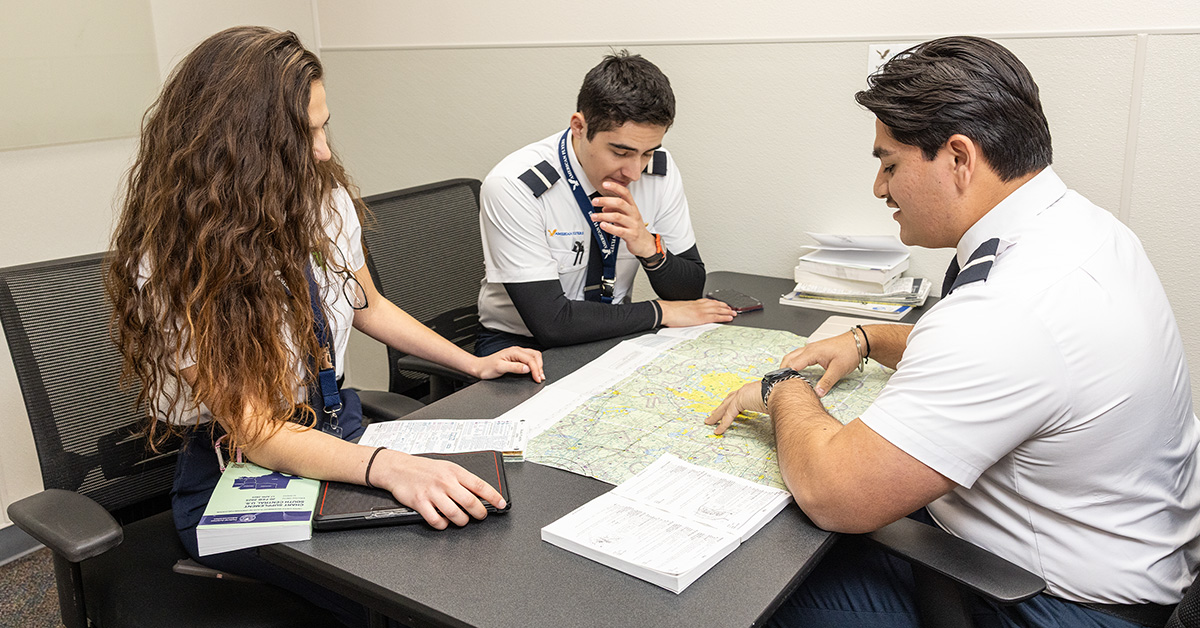
One way American Flyers’ students are prepared for the oral portion of the practical test is to participate in what has become known as a “mock oral.” An experienced instructor will act as an examiner and conduct a complete oral exam to determine the applicant’s readiness. Any weak areas will be identified and receive addition attention. In reality, the mock oral is merely the culmination of the kind of questions the instructor has been asking all throughout the training.
One additional preparation is to make sure the student is aware of common errors associated with any given area of understanding. It should not be surprising to learn that there are some common errors that students make because of misunderstanding or lack of sufficient knowledge. An experienced instructor, not to mention the DPE, is aware of these common errors and will probe these areas to ensure the candidate has the requisite knowledge and understanding.
When the preparation is complete, the practical test is scheduled. Once the specific examiner is known, it provides one final area for preparation. DPEs all have their favorite areas that they like to emphasize and even specific questions they like to ask. While the preparation for the oral is based entirely on the ACS, and not focused on the DPE, it doesn’t hurt to be prepared for any particular emphasis the examiner may have. Just makes sense.
One final area of preparation is to have all the paperwork the examiner will need ready to hand over when you first arrive. If you come with all the required paperwork ready to present, you will be off to good start. Any applicant that must be asked for one thing after another, or worse yet, does not have it readily available, starts off on the wrong foot, not a good thing when you are trying to convince the examiner you are prepared for the exam.
The documents the examiner will expect you to have ready include: a government-issued photo ID, the completed IACRA application, a current pilot certificate, a current medical, the knowledge test results showing a passing score, and a logbook with all required endorsements. The examiner may also want to see the maintenance records for the airplane you plan to fly during the checkride. He will ask you to use those records to show that all required maintenance inspections are up to date. Pro tip: since maintenance records are added in sequence, start at the back and move towards the front for the most recent entries. He also may ask a question about what you would do if you discovered an inoperable piece of equipment during preflight. Basically, he wants to know that you can determine if an airplane is airworthy.
Lastly, don’t forget the examiner’s fee which you should have received information about prior to the test.
Taking an oral exam is just like taking any other exam. Know the material and how to apply it and you will pass. There are no shortcuts to being prepared and you shouldn’t look for any. The knowledge gained during your training is not simply to pass a test. It is knowledge and understanding that you will use to safely conduct your flying throughout your career as a pilot. Being knowledgeable and well prepared can turn something that would otherwise be traumatic into something handled with confidence.