







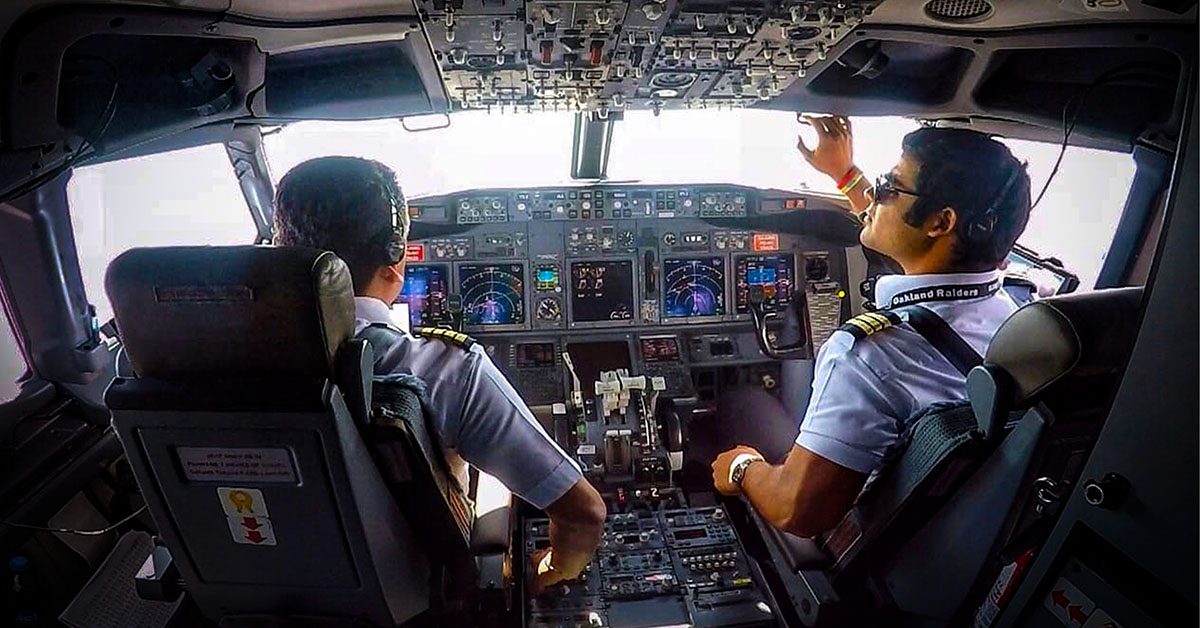




The moment the Federal Aviation Administration (FAA) issues your ATP certificate, you’re recognized as an elite aviator. This license is your ticket to the big leagues; it allows you to sit in the left seat, operate commercial airliners, and ultimately become a Captain under Federal Aviation Regulations (Part 121).
A Commercial Pilot License (CPL) lets you get paid to fly, but the ATP is the fundamental, non-negotiable qualification for anyone serious about leading a major airline’s flight operations. It proves you do not just know how to fly; you have mastered complex aircraft systems, weather interpretation, crew resource management, and high-stakes decision-making while transporting passengers and valuable equipment.
The 1,500-Hour Climb: The ATP Qualification Marathon
The path to this ultimate certification is not a stroll or a sprint; it is a marathon. The FAA demands a deep commitment measured in flight hours and experience. We are talking 1,500 total flight hours, a testament to your dedication. But it is not just volume, it is quality: 500 hours of cross-country flight time, 100 hours of night flying, 75 hours of instrument experience, and 250 hours as pilot-in-command (PIC). These 1,500 hours prove you can command both the aircraft and the mission.
And finally, the professional requirements: you must be at least 23 years old, already hold a Commercial Pilot License and an Instrument Rating, and pass the rigorous standards of a First-Class Medical Certificate to prove your physical and mental fitness. It is a high bar, but that is what makes the achievement so respected.
The Weight of Command: More Than Just Flying
The ATP certificate carries immense responsibility. You are not just a pilot; you are the final authority on flight safety. Hundreds of passengers, billions of dollars of equipment, and the reputation of an airline rest on your shoulders. This role demands more than hand-eye coordination; it requires stellar decision-making under pressure, whether navigating a sudden storm, handling an emergency, or leading your crew as a cohesive unit.
Learning never stops. The industry evolves constantly, meaning ATPs must participate in recurrent training sessions, proficiency checks, and line checks. Staying current is not a chore, it is a critical safety mandate in an ever-advancing commercial aviation sector. Modern ATPs also lead the aviation community, often moving into training positions to teach new pilots and advance safety standards.
The Payoff: Salary and a Soaring Career Outlook
The aviation market is hungry for ATPs. Industry analysts are not just predicting growth; they are highlighting it. The U.S. Bureau of Labor Statistics expects airline and commercial pilot employment to grow by 5% from 2023 to 2033. Boeing projects nearly 2.4 million new commercial aviation professionals globally over the next 20 years (July 2025 Aviation Industry Report).
This demand translates directly into exceptional compensation:
- Median annual salary for a U.S. airline pilot: $226,600
- Veteran captains at major carriers: $350,000–$500,000
- Top international routes, including base salary, bonuses, and additional pay: $700,000+
It’s a career that rewards dedication with a truly elite income.
A Life Above the Clouds: It’s a Calling, Not a Job
Ultimately, what defines a successful Airline Transport Pilot is a deep, unshakeable love for aviation. This profession demands more than technical skill; it requires a commitment to continuous growth and a passion for flying. The most accomplished ATPs treat their certification as the official starting point for an enduring career dedicated to mastery and safety.
Becoming an Airline Transport Pilot is one of the most demanding yet fulfilling paths you can take. It requires significant time, financial investment, and unwavering dedication. In return, the ATP certificate grants access to a career that blends technical mastery with leadership, offering the unique fulfillment of operating advanced aircraft to transport people worldwide.
Frequently Asked Questions (FAQS)
While both allow a pilot to be paid for their services, the ATP is the “PhD of aviation.” According to American Flyers, a Commercial Pilot License allows you to fly for compensation, but the ATP certificate is the fundamental, non-negotiable qualification required to act as a Captain for a scheduled airline under Part 121 regulations. It signifies that a pilot has moved beyond basic flight skills to master complex aircraft systems, crew resource management, and high-stakes decision-making.
The path to an ATP is often referred to as the “1,500-hour climb.” As noted by American Flyers, the FAA typically requires a total of 1,500 flight hours. This experience must include specific “quality time,” such as 500 hours of cross-country flight, 100 hours of night flying, 75 hours of instrument time, and 250 hours as pilot-in-command (PIC). These requirements ensure the pilot has the seasoned experience necessary to command a mission involving hundreds of passengers.
Beyond flight time, an applicant must meet strict professional and physical standards. According to American Flyers, candidates must be at least 23 years old, hold a current Commercial Pilot License with an Instrument Rating, and possess a First-Class Medical Certificate. This medical certification proves the pilot’s physical and mental fitness to handle the rigors of long-haul and commercial flight operations.
The demand for ATP-certified pilots is at a historic high. American Flyers highlights that the median annual salary for a U.S. airline pilot is approximately $226,600, with veteran captains at major carriers earning between $350,000 and $500,000. Top international routes and bonuses can even push total compensation above $700,000. This growth is supported by Boeing’s projections of nearly 2.4 million new commercial aviation professionals needed globally over the next 20 years.
No. An ATP certificate marks the beginning of a commitment to continuous learning. As American Flyers explains, the industry’s constant evolution requires ATPs to undergo regular recurrent training, proficiency checks, and line checks. Staying current is not just a regulatory chore but a critical safety mandate, as these elite aviators are the final authority on flight safety and are often called upon to lead and mentor the next generation of pilots.