






If you want to become a commercial pilot, your training path matters. A lot of students start by looking at the obvious things first: cost per hour, aircraft availability, location, and how quickly they can begin. Those are all valid considerations. The bigger question is how the training is organized and whether it gives you a realistic path from the first lesson to your commercial pilot license.
That is where students usually start comparing two broad options. One is an à la carte approach, where training happens step by step, certificate and ratings, with a more flexible schedule. The other is a structured program built around a defined curriculum, clear sequence, and steady progression. Both can lead to the same commercial certificate. The day-to-day experience can look very different.
What À La Carte Commercial Flight Training Looks Like
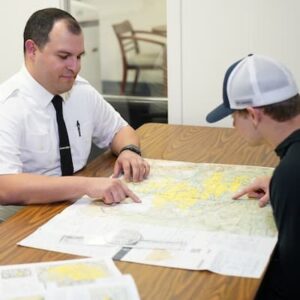
À la carte training usually refers to a more flexible, individually scheduled path, often under Part 61. A student may work 1-on-1 with an instructor, train around a job or family obligations, and move at a pace that fits real life. For some people, that is exactly what they need.
That flexibility can be useful for students who already have some flight time, students returning after a long gap, or students whose schedule makes full-time training unrealistic. It can also appeal to people who want more control over how often they fly and how they spread out the cost.
The challenge is that flexibility still needs structure behind it. Commercial training builds on repetition, sequencing, and momentum. Long breaks, inconsistent lesson flow, change of instructors can severely delay course completion and lead to loss of developed skills. Uneven preparation can slow progress and increase total training time. Every extra hour in the airplane carries a cost, so efficiency matters.
What a Structured Program Looks Like
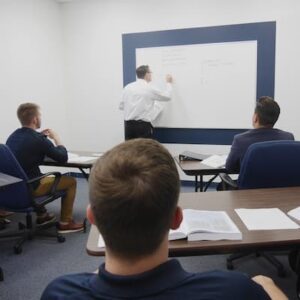
A structured program follows a syllabus, a training sequence, and a set curriculum that guides the student from one stage to the next. Under FAA-approved Part 141 training, schools use formal course outlines, dedicated facilities, instructor oversight, and approved curricula.
In practical terms, that means the training is designed to move forward in an intentional order. Skills are introduced when the student is ready for them. Ground school, simulator work, and flight lessons support each other. Progress is easier to track, and the training tends to stay connected from one lesson to the next.
For students who want a direct path into a professional flying career, this kind of organization can make a real difference.
Where American Flyers Fits Into the Conversation
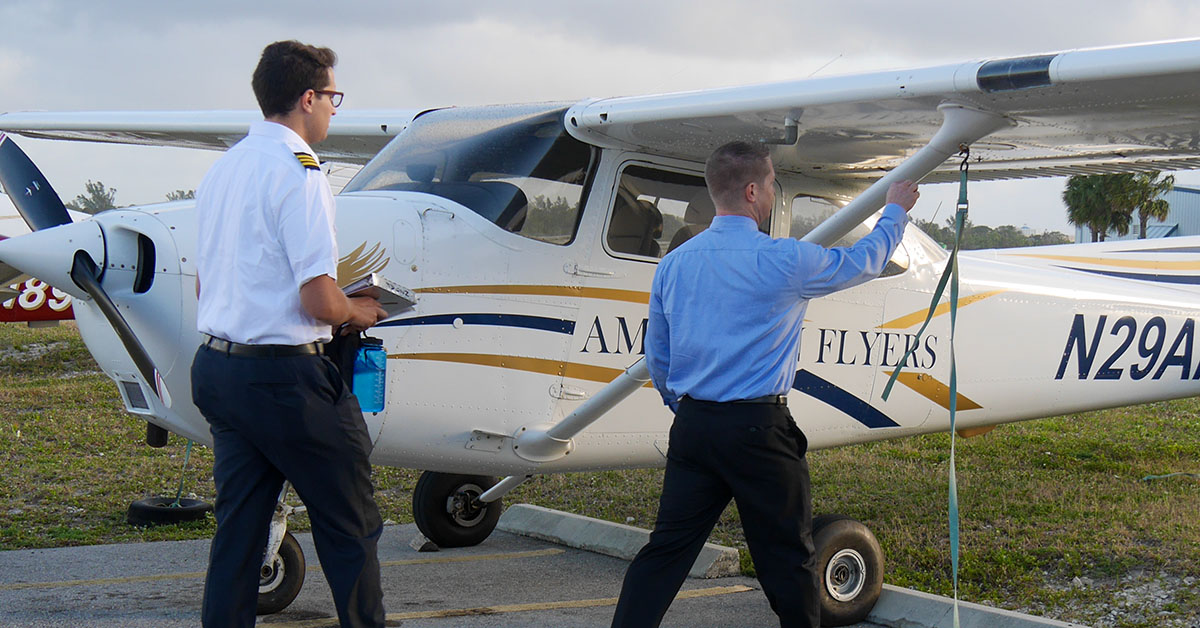
This is where American Flyers becomes especially relevant, because we offer more than one way to complete commercial flight training.
American Flyers has a full-time Airline Academy for students who want an immersive, career-focused path. Our full-time Airline Academy is an 8 to 10 month structured program covering Private, Instrument, Commercial, CFIA, and CFII training. Afterward, many students build the flight time needed for airline hiring by working as instructors.
That is one path.
American Flyers also offers 1-on-1 training for students who cannot commit to the full-time Airline Academy schedule. We ensure that the same curriculum can be completed through individualized instruction. That means a student who needs a customized training schedule because of work, family, location, or previous training can still follow an organized commercial training path without being locked into the academy format.
Customized Schedules Without Losing the Structure
This is the part that often gets missed in the usual flight school comparison.
A customized training path does not have to mean disconnected training. At American Flyers, students who cannot attend the Airline Academy full time can still complete the same curriculum through 1-on-1 instruction. Students who arrive with previous flight experience can complete an evaluation flight and resume training at the appropriate point in the syllabus.
That gives the training a more individualized path.
A student may need evenings, weekends, a slower pace, or a modified sequence based on prior experience. A student may already hold a Private Pilot Certificate and need to move directly into instrument and commercial training. Another student may have partial training from another school and need a practical way to pick up where they left off. American Flyers supports all kinds of situations.
So when people hear “structured program,” they should not assume there is only one rigid model. At American Flyers, structure and customization can exist together.
Why This Matters for Commercial Training
Commercial pilot training is where small inefficiencies start to become expensive. The standards are tighter. The flying is more precise. The knowledge base is broader. The student is building toward professional expectations.
Under Part 61, a commercial pilot certificate typically requires 250 hours of flight time. Under an approved Part 141 program, that can be reduced to 190 hours. That difference is significant in both time and money. It is one reason structured training remains attractive to career-minded students.
American Flyers also has a combined instrument and commercial phase in its professional pilot curriculum. That kind of integration helps students keep moving, even when weather or scheduling affects the original plan for the day. The students can learn procedures on the ground, and then practice them in a flight training device or simulator, and then perform them in the aircraft. That sequence supports consistency and helps make flight time more productive.
Which Option Makes More Sense?
The honest answer depends on the student.
A full-time academy works well for students who want an accelerated path, a highly immersive environment, and a clear professional timeline. An individualized path works well for students who need flexibility and still want the benefit of a developed curriculum, experienced instructors, and a training system that keeps the big picture in view.
American Flyers offers both. Students can pursue the Airline Academy when full-time immersion makes sense. Students can also train through a customized 1-on-1 path when their schedule, background, or circumstances call for something more individualized.
For aspiring commercial pilots, that kind of choice matters. So does the ability to train in a way that keeps the process organized from beginning to end. By offering both the immersion of our Airline Academy and the flexibility of customized 1-on-1 training, we ensure every aspiring pilot has an organized, efficient, and successful path to commercial proficiency.