












One of the most common questions in flight training is: What is the difference between Part 61 and Part 141 training, and which is best for me?
To answer the first part, these are two different regulatory paths under which a pilot can be certified. Each has its own advantages and restrictions, but both lead to the same goal. The second part of the question, which is best for me, depends on a number of factors specific to each student.
Understanding the Choice
If a student attends a Part 61 school, training is limited to the requirements and flexibility of Part 61 regulations. At an FAA-approved Part 141 school, such as American Flyers, training can be structured to maximize advantages and reduce restrictions depending on where the student is in the program.
In other words, the decision is often less about Part 61 versus Part 141 and more about whether the school can use both frameworks to create a program tailored to the student’s needs.
For example, a student aiming for Private, Instrument, Commercial, Multi, and Flight Instructor ratings who has already completed 25 hours of Private Pilot training elsewhere may benefit from starting with a Part 61 program for flexibility. After completing the Private Pilot certificate, they could transition to American Flyers’ Part 141 combined Instrument and Commercial course to take advantage of the reduced 60-hour training requirement.
When it comes time for Flight Instructor training, other factors such as eligibility for VA benefits are considered to determine which program structure is best.
Beyond Flight Hours
A common mistake when comparing Part 61 and Part 141 training is focusing only on the number of flight hours. Other factors, such as previous experience, availability, access to personal aircraft, and training goals, are equally important.
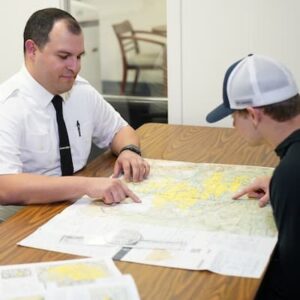
At American Flyers, each location director can conduct a logbook audit to determine how previous experience can be credited toward the student’s desired program. This ensures the most efficient path to certification.
The Advantage of Part 141 Training
The most obvious benefit of Part 141 training appears in the Commercial Pilot Certificate. Students can complete the program in 190 hours instead of the Part 61 minimum of 250 hours.
American Flyers’ combined Instrument and Commercial program provides even greater value. Typically, Instrument training must be completed before starting Commercial training. This sequencing can result in extra flight hours beyond what is necessary to master commercial maneuvers. The combined program allows students to complete Instrument and Commercial requirements simultaneously.
This approach offers several advantages:
- Students can focus on perfecting critical skills throughout the Commercial phase without adding unnecessary hours or cost.
- Weather conditions are used strategically. Marginal or actual IFR conditions provide additional IFR experience, while VFR weather allows for solo cross-country flights. This reduces delays caused by waiting for specific training conditions.
Structural Differences Between Part 61 and Part 141
Part 141 training follows an FAA-approved syllabus. Lessons are designed in a building-block sequence to ensure students master foundational skills before moving on to more advanced topics. This structured approach reduces wasted hours and ensures competency.
FAA approval also extends to aircraft, classrooms, and facilities. Aircraft are maintained according to strict standards, and classrooms must meet requirements for size, lighting, and climate control. Regular FAA inspections ensure compliance.
Even students training under Part 61 at American Flyers benefit from these standards, including structured programs, well-maintained aircraft, and high-quality classroom conditions. These advantages are often unavailable at Part 61-only schools.
Instructor Training and Standardization
All instructors at American Flyers undergo approved training and recurring evaluations to teach under Part 141. Each program has an FAA-approved Chief Pilot and Assistant Chief Pilot who monitor student progress and ensure training milestones are met.
Students also complete Achievement and Performance Reviews throughout their training. Each student is assigned to a senior instructor pilot team that oversees day-to-day progress and ensures all training areas are properly covered.
Standardization of instructors ensures students can train according to their own schedules, even when instructors are unavailable due to vacation, illness, or other commitments. Training is not delayed because every instructor teaches the same approved methods. These benefits apply to both Part 61 and Part 141 students at American Flyers.
Customizing Training for Each Student
The best training path is not always a choice between Part 61 or Part 141. The ideal program leverages the strengths of both, allowing students to progress efficiently while accommodating their unique experience, goals, and schedule.
At American Flyers, we structure programs to maximize flexibility, reduce unnecessary flight hours, and ensure every student receives comprehensive, high-quality training.